By Poljan Properties
Manhattan has more outdoor space than most people who have never lived here expect, and more than many residents ever fully explore. From the High Line to the Hudson River waterfront to Central Park, a well-planned outdoor day here covers a surprising amount of ground. We help buyers find
homes in Manhattan every day, and the neighborhoods they choose are almost always shaped by the outdoor access they want. Here is how to make the most of it.
Key Takeaways
-
Discover how to build a full outdoor day in Manhattan using the city's best parks and waterfronts from morning through afternoon.
-
Learn which sections of the High Line, Hudson River Park, and Central Park reward the most time.
-
Find out how Manhattan's outdoor spaces connect across neighborhoods so a single day covers far more than one destination.
-
Understand why outdoor access shapes Manhattan real estate and which neighborhoods deliver it best.
Morning: The High Line
Start at the Gansevoort Street entrance in the Meatpacking District and head north. The High Line works best early, before the crowds arrive and the path fills up. At 1.45 miles end to end, it takes about 45 minutes at a relaxed pace — longer if you stop at the seating areas or the art installations along the way.
What to Know Before You Walk It
-
The southern section between Gansevoort and 14th Street has the densest plantings and the clearest sightlines back toward the Whitney Museum of American Art, which sits directly below the park's southern entrance
-
The Chelsea stretch between 14th and 23rd Street passes above street level, offering a view of the neighborhood that you simply cannot get on foot below
-
The northern section near Hudson Yards between 30th and 34th Street opens up with wider river views and a more contemporary feel than the southern end
-
Weekday mornings and early weekend hours are significantly quieter than midday -- arriving before 9 AM on a weekend makes a real difference
Come early and take your time. The High Line is better when it is not crowded.
Mid-Morning: Hudson River Park
From the northern end of the High Line at 34th Street, walk west to the river and turn south. Hudson River Park runs along the entire western edge of Manhattan, and it is one of the most useful stretches of outdoor space the city has.
The Stops Worth Making on the Way South
-
Pier 84 at 44th Street has a wide lawn, direct river views, and kayak rentals available through the warmer months
-
The Hudson River Greenway running through the park is a dedicated path completely separate from traffic — cyclists and pedestrians use it from end to end, and it is one of the best ways to move quickly along the west side
-
Pier 45 at Christopher Street in the West Village has a large open lawn that draws sunbathers on warm days and offers an unobstructed view across to New Jersey
-
Little Island, the floating park off Pier 55 at 13th Street, is a short detour worth taking -- the design is genuinely unlike anything else in the city, with winding elevated paths and layered viewpoints over the water
The walk from Hudson Yards to the West Village along the river takes about an hour on foot. On a bike it takes considerably less.
Midday: Washington Square Park
From Pier 45, it is a short walk east into Greenwich Village. Washington Square Park sits at the heart of the neighborhood and midday on any decent-weather day is when it is most alive.
What Makes It Worth the Stop
-
Musicians take positions around the central fountain and near the arch throughout the day — pianists, jazz groups, solo performers — and the energy in the park reflects it
-
Chess players set up boards on the southwest side and play continuously through the afternoon, drawing a steady crowd of observers
-
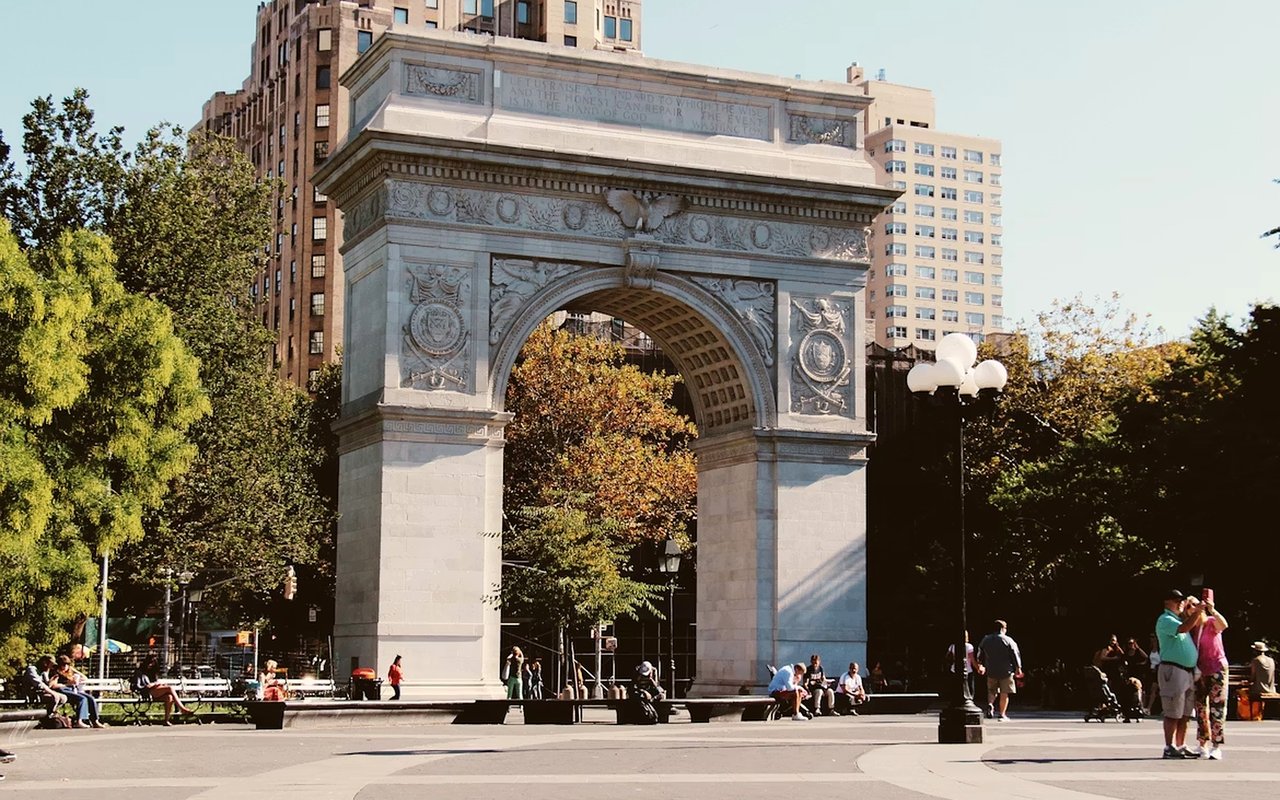
The Washington Arch at the park's northern edge frames a direct view up Fifth Avenue and is one of the more quietly impressive pieces of civic architecture in the city
-
The park connects directly to the streets of the West Village and SoHo, making it a natural midday stopping point before heading north
Bring lunch or pick something up from the surrounding streets. The seating is plentiful and the foot traffic makes it one of the better people-watching spots in Manhattan.
Afternoon: Central Park
No outdoor day in Manhattan is complete without time in Central Park. The park covers 843 acres between 59th and 110th Streets, and the mistake most people make is treating it as a single place rather than a collection of distinct areas.
The Sections Worth Prioritizing
-
The Ramble between 73rd and 79th Streets on the west side is a 36-acre woodland with winding paths that feel genuinely quiet
-
The Great Lawn between 79th and 85th Streets opens up completely, with views of the surrounding skyline from the middle of the grass that make clear you are sitting at the center of an island
-
Bethesda Terrace and the Fountain at 72nd Street is the architectural centerpiece of the park, with a formal terrace descending to the lakeside fountain and a tiled arcade beneath it
-
The Reservoir between 85th and 96th Streets has a 1.58-mile running path around its perimeter — one of the most popular routes in the city, with skyline reflections in the water on clear days
Enter at 72nd Street from either side and work north. For those who enjoy wandering, you’ll find a lot of ground to explore.
Frequently Asked Questions
What is the best time of year for an outdoor day in Manhattan?
Late spring and early fall are the strongest seasons. April through June and September through November bring consistent mild weather and the parks at their most active. That said, Manhattan's outdoor spaces are used year-round, and a clear winter morning on the High Line or along the Hudson is its own kind of unique and magical experience.
How do Manhattan residents typically use the city's parks?
Most use them daily — for running, cycling, or walking — rather than as destinations for a full day out. The Hudson River Greenway, the Central Park reservoir loop, and Riverside Park on the Upper West Side function as commuter routes as much as recreational spaces for people who live nearby.
How does outdoor access affect Manhattan real estate?
It shapes neighborhood choice directly. West Village and Chelsea buyers cite Hudson River access. Upper West Side and Upper East Side buyers weigh proximity to Central Park. The outdoor access a neighborhood offers is one of the first things buyers think through, and it is one of the factors that holds long-term value in the Manhattan market.
Reach Out to Poljan Properties
Manhattan's outdoor spaces are part of what makes living here work — and which greenspaces are closest to your front door is an aspect worth thinking through carefully when you are choosing a neighborhood.
Our team of real estate professionals know this city well. We help buyers find homes where the daily life they want is already built into the location. When you are ready to explore what Manhattan living looks like for you, reach out to
Poljan Properties and we’ll help you find your dream property.