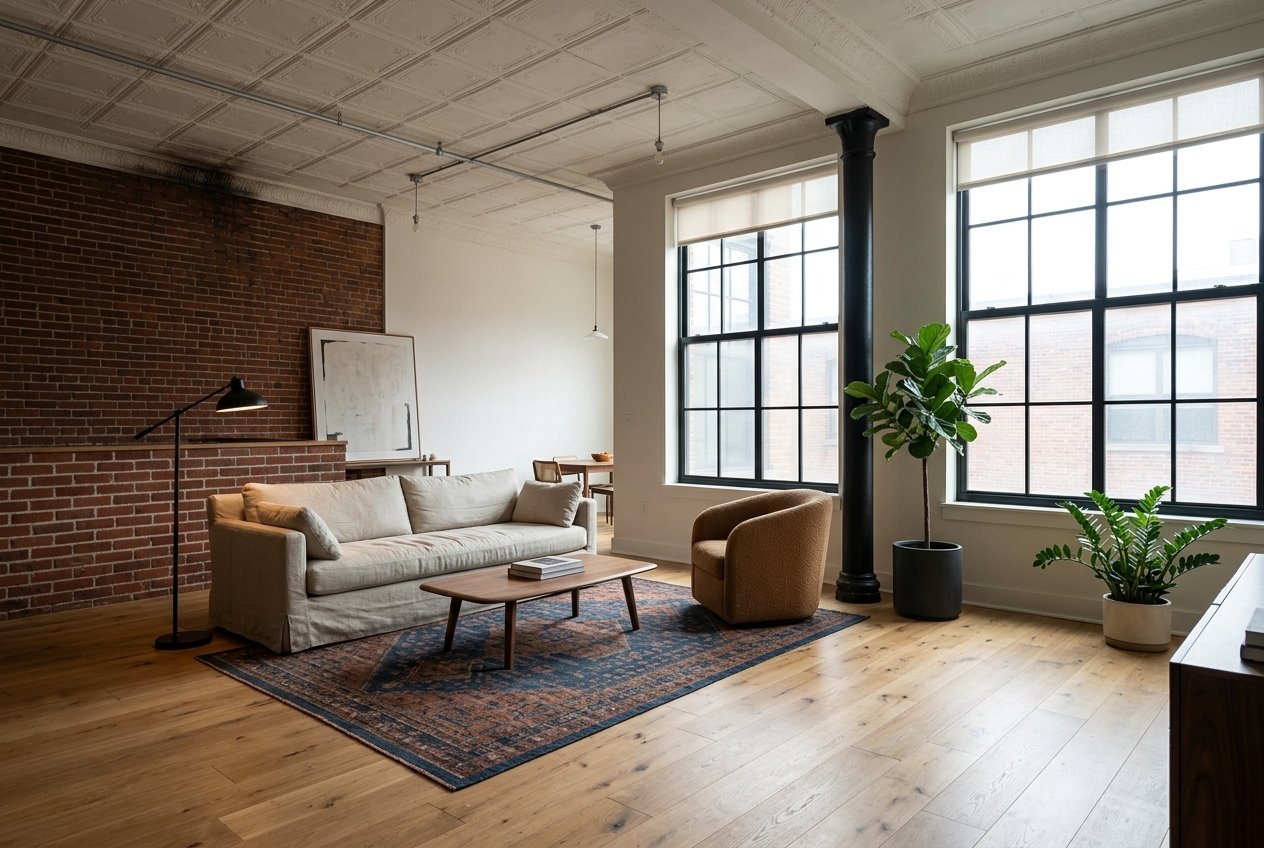
Staging A SoHo Loft For Today’s Buyers
June 18, 2026
June 18, 2026
Wondering how to stage a SoHo loft without stripping away the very character buyers are paying for? In a neighborhood known for dramatic volume, oversized windows, and historic industrial bones, staging is less about filling space and more about helping buyers understand how to live in it. If you are preparing to sell, the goal is to make your loft feel warm, polished, and functional from the first photo to the final showing. Let’s dive in.
SoHo is not a typical Manhattan housing market. The SoHo-Cast Iron Historic District covers 26 blocks and about 500 buildings, and New York City describes it as the largest concentration of cast-iron facades in the world. Many lofts began as former textile factories, which helps explain the large open layouts that still define the neighborhood today.
That history shapes how buyers view a listing. They are not just looking at finishes or square footage. They are also judging ceiling height, natural light, room flow, and whether the open plan feels elegant or confusing.
Presentation matters even more because SoHo sits at the top of the market. StreetEasy’s 2025 year-in-review ranked SoHo as New York City’s most expensive sales neighborhood, with a median asking price of $3,995,000. In a premium market, buyers tend to expect a listing to look fully composed right away.
Staging helps buyers picture themselves in a home, and that matters in a loft where one large room can serve many purposes. In the 2025 NAR staging survey, 83% of buyers’ agents said staging made it easier for buyers to visualize a property as their future home. That is a strong signal that layout clarity can influence how a space feels.
Buyers also care deeply about how a home looks online before they ever step inside. NAR reported that listing photos were important to 73% of clients, and Zillow says 79% of recent buyers shopped online. Nearly half said professional photos were extremely or very important to their buying experience.
That means your loft needs to perform in two places at once. It has to feel compelling on screen, and it has to feel even better in person. If the listing photos promise something polished and the showing feels flat or unfinished, buyers may lose confidence quickly.
The best SoHo staging starts by letting the architecture lead. Buyers are often drawn to exposed columns, tall ceilings, large windows, brick walls, and the long sight lines that make loft living distinct. Those features should stay visible and easy to read.
Instead of trying to make the home feel like a traditional apartment, focus on definition and balance. You want the space to feel edited, not over-furnished. Large pieces that fit the scale of the loft usually work better than many small items that break up the room.
This is especially important in SoHo’s former industrial buildings, where openness is part of the appeal. A staging plan should show how the space functions while keeping the volume and light front and center.
Today’s buyers are often open to smaller rooms than they were a few years ago, but they are placing greater value on flexible, multi-use spaces, wellness, efficiency, and connection. In a SoHo loft, that means open square footage should feel intentional. Empty space alone is not enough.
The layout should create clear zones without crowding the room. A strong plan often includes:
This approach matches what buyers care about most. In NAR’s 2025 staging survey, the living room ranked as the most important room to stage, followed by the primary bedroom and kitchen. Nearly half of sellers’ agents also staged a home office or office space.
Design trends have shifted away from cool, sparse interiors and toward warmer, softer spaces. Houzz’s 2025 trend reporting highlights earthy neutrals, warm woods, natural materials, rounded forms, woven textures, and organic-modern styling. That direction works especially well in a SoHo loft.
The goal is not to hide the industrial character. It is to soften it just enough so buyers feel comfort as well as drama. A loft can look striking in photos but still feel cold if every finish reads hard or minimal.
Consider layering in materials and shapes that add warmth, such as:
These choices help balance brick, metal, cast iron, and concrete. The result is a home that feels refined and livable, not staged for effect alone.
In an open loft, buyers often form their impression from a few high-impact areas. The living area tends to carry the most visual weight, so it should feel complete and scaled correctly. That usually means a grounded seating arrangement, a rug large enough for the furniture, and a focal point that does not compete with the windows or architecture.
The primary bedroom should feel calm and edited. Even if the sleeping area is part of a broader loft plan, staging should create a sense of separation and ease. Bedding, lighting, and nightstands can help signal rest and routine without making the area feel boxed in.
The kitchen should read clean, useful, and ready for daily life. Keep counters simple, limit accessories, and make sure the connection between kitchen and living space feels smooth. In a loft, buyers often notice how well these zones relate to each other.
Loft buyers may expect character, but they still want everyday function. In older homes, storage can be a concern, so closets, built-ins, and utility areas should be carefully edited before the listing goes live. Buyers notice whether a home looks beautiful, but they also notice whether it looks manageable.
Zillow’s open-house guidance tells buyers to pay attention to natural light, layout, and storage. That makes those features important to stage and photograph clearly. If a closet is packed or a built-in looks chaotic, buyers may assume the home lacks practical storage, even when it does not.
A simple rule helps here: reduce what is visible, organize what remains, and leave enough open space to signal capacity. In a loft, that can make daily living feel easier and more believable.
For many buyers, the listing photos are the first showing. Professional photography is especially important in SoHo because loft value often lives in scale, volume, and window lines that need to be captured well. If those features are not communicated online, you may lose attention before a buyer ever schedules a visit.
Zillow recommends deep cleaning, decluttering, depersonalizing, opening blinds, turning on lights, removing window screens when possible, and shooting at midday. It also recommends landscape-oriented images, chest-height composition, wide-angle lenses, and showing how rooms connect to one another.
For a SoHo loft, that advice is practical because it helps the space read honestly and clearly. Good photography should reveal daylight, ceiling height, and circulation. It should not rely on heavy editing to invent qualities the home does not have.
Zillow also recommends using 22 to 27 photos in the listing. In a loft, that range can help tell the full story, especially when the photos show not just individual corners but also the relationship between living, dining, sleeping, and work areas.
Buyers want polished visuals, but they also want accuracy. NAR found that 58% of respondents said buyers were disappointed when homes did not look as polished as TV-staged homes. At the same time, over-styled or misleading visuals can create a mismatch between expectation and reality.
That is why the strongest SoHo presentation feels elevated but believable. The home should look finished, bright, and thoughtfully composed. It should also look like the home a buyer will actually walk into.
This matters in luxury sales, where trust plays a big role in decision-making. Honest presentation supports stronger interest because buyers can connect the listing story to the in-person experience.
If your pre-listing work goes beyond cosmetic staging, it is smart to check local rules before making changes. The Landmarks Preservation Commission says it must approve alterations affecting designated buildings, and most buildings in historic districts are subject to the same review process.
LPC also notes that ordinary exterior repairs or most interior work usually do not require review unless the work affects the exterior or requires a Buildings Department permit. For many sellers, staging itself is straightforward. But if you are considering window replacement or exterior changes before listing, it is worth confirming what applies to your building.
If you want a simple way to think about staging a SoHo loft, start here: protect the character, define the layout, and add warmth. That formula fits both the neighborhood’s historic loft stock and the way buyers shop today.
In practical terms, that means:
In a market like SoHo, staging is not about decorating for decoration’s sake. It is about helping buyers understand the value of the space quickly and emotionally. When the loft feels both iconic and livable, you give your listing a better chance to stand out.
If you are preparing a Manhattan home for sale and want a design-forward, discreet strategy tailored to the property, Poljan Properties can help you shape the presentation, photography, and marketing plan with a boutique level of care.
Stay up to date on the latest real estate trends.

Your Guide to Creating a Stunning Personal Library in New York City.

Your Guide to an Outdoor Day in Manhattan: Parks, Waterfront, and Green Space Worth Exploring.
Poljan Properties was founded in 2012 with a passion to provide New Yorkers and newcomers with exceptional personalized service, advice, and uncompromised loyalty. We work tirelessly for the best outcomes for our clients and do so with the greatest integrity and kindness.